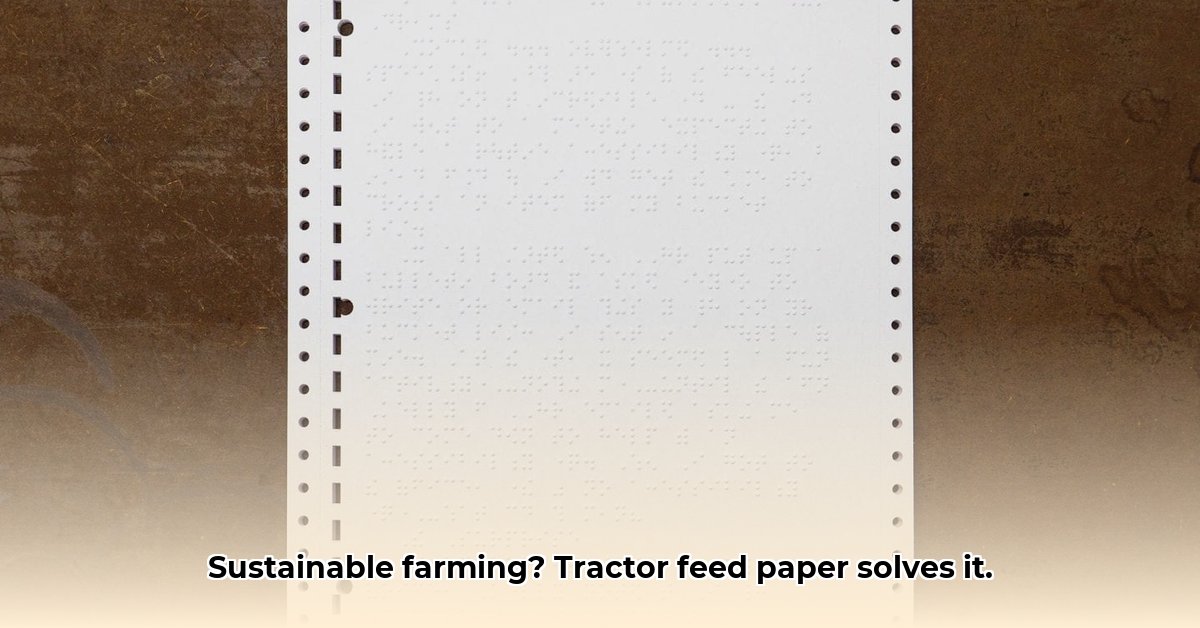
Tractor Feed Paper: A Greener Way to Farm
Farm paperwork – from meticulous field records to crucial invoices – is a constant. But what if this essential administrative task could be kinder to the environment? Enter tractor feed paper, a surprisingly impactful solution for sustainable farming practices. This guide explores its benefits, practical applications, and how it contributes to a more eco-conscious agricultural future. We'll also delve into real-world examples and cost-benefit analyses to illuminate its potential.
Isn't it time to consider the environmental impact of even small farm practices? Tractor feed paper offers a way to significantly reduce paper waste while boosting efficiency – two factors that are as beneficial to the farm's bottom line as they are to the planet.
Why Choose Tractor Feed Paper?
Sustainability in farming is no longer optional; it's a necessity. Tractor feed paper offers several significant advantages:
Reduced Waste, Increased Savings: The continuous feed system drastically minimizes paper jams and wasted sheets compared to single-sheet printers. This directly translates to lower paper costs and a smaller environmental impact. One Iowa farm reported a 20% reduction in paper waste after switching to tractor feed paper.
Energy Efficiency: Faster, uninterrupted printing means less energy consumption. These cumulative savings contribute to reducing your farm's carbon footprint and lower energy bills.
Eco-Friendly Options Abound: Many brands prioritize recycled materials and sustainable forestry practices. Look for certifications such as FSC (Forest Stewardship Council) to guarantee responsible sourcing. This ensures your choice aligns with your commitment to environmental stewardship.
Choosing the Right Tractor Feed Paper
Selecting the optimal tractor feed paper involves considering several key factors:
Paper Weight (gsm): Heavier paper (e.g., 80 gsm or above) offers greater durability but might jam in older printers. Lighter paper (e.g., 60 gsm) is cost-effective but less robust. The ideal weight depends on your printer and the intended use of the documents.
Material Composition: Prioritize papers with high percentages of recycled post-consumer waste (PCR) content for a minimized environmental footprint, significantly reducing reliance on virgin pulp.
Size Compatibility: Ensure the paper dimensions match your printer's specifications to avoid feeding issues and wasted prints.
A Step-by-Step Guide to Using Tractor Feed Paper
Printer Compatibility Check: Consult your printer's manual to confirm compatibility with tractor feed paper. Some older models might not be equipped for this type of continuous feed.
Paper Loading: Carefully align the paper in the designated tray, ensuring correct perforation alignment. This is crucial for smooth feeding and prevents jams.
Printer Settings: Adjust printer settings to match the paper type and size. A test print is highly recommended before printing important documents.
Troubleshooting: Common issues include paper jams (often due to incorrect loading) and misaligned printing (usually caused by incorrect settings). Refer to your printer’s manual for solutions. Preventative maintenance of your printer is key for optimal usage.
Continuous Monitoring: Regularly check feeding and ensure consistent quality throughout your printing process.
Cost-Benefit Analysis: Sustainable Practices and Financial Savings
While the upfront cost of tractor feed paper might seem comparable to standard paper, the long-term savings are substantial. Consider:
Reduced Paper Waste: Minimized waste translates directly to lower paper expenses, a consistent and considerable savings over time. Many farms report significant reductions in their annual paper costs.
Improved Efficiency: Uninterrupted printing significantly boosts productivity, freeing up time for other essential farm tasks. Increased efficiency directly correlates to financial gains.
Lower Energy Consumption: Reduced printing time means less energy usage, leading to lower electricity bills. Energy savings accrue steadily, contributing significantly to cost reduction over time.
Case Study: Wilson Family Farms
Wilson Family Farms in Iowa reported a 20% decrease in paper waste and a 15% reduction in printing costs after switching to tractor feed paper. Their experience underscores the tangible benefits of adopting this sustainable practice. Their reduced carbon footprint is also a testament to the environmental advantages.
Tips and Tricks for Optimal Efficiency
Bulk Purchasing: Buying in bulk typically results in cost savings per sheet and reduces packaging waste.
Proper Storage: Store paper in a cool, dry place to protect it from damage and maintain its print quality.
Regular Printer Maintenance: Preventative maintenance minimizes the risk of costly jams and prolongs printer lifespan.
The Future of Sustainable Farming
Tractor feed paper is more than just an efficient printing solution; it's a symbol of a broader shift towards sustainable agricultural practices. Continued innovation in sustainable material production and printing technology will solidify its place in a greener future for agriculture. The choice is clear: embrace sustainability and its associated benefits.
"Sustainable farming isn't just about environmental responsibility; it's also about smart business practices," says Dr. Emily Carter, Agricultural Sustainability Expert at the University of California, Davis. "By reducing waste and increasing efficiency, farmers can significantly improve their bottom line while minimizing their environmental impact."
Choosing tractor feed paper is a small step that contributes greatly to both a sustainable future and a more economically viable farm.